

By Dr. Lixing Chen (Star Lee), DBA | Global Business Strategy, Starvey Global
Introduction: The Erosion of Traditional Sourcing Middlemen
The traditional B2B pet product distribution model—built for decades on information asymmetry, regional warehousing advantages, and bulk purchasing power—is collapsing at an unprecedented rate. Temu, Shein, and other ultra-low-cost cross-border e-commerce platforms have systematically commoditized 82% of mainstream pet supplies, driving wholesale margins for basic collars, plastic bowls, plush toys, and standard leashes below 12% in North American and European markets (Persistence Market Research, 2026). A 2026 industry analysis found that 68% of global mid-sized distributors have seen their core commodity revenue decline by 25% or more since 2024, as independent pet retailers, veterinary clinics, and even end consumers now source directly from Chinese factories via platform-integrated shipping solutions (360 Research Reports, 2026).
The brutal, non-negotiable truth is this: You will never out-compete Temu on price for standard pet commodities. Their vertically integrated logistics network, factory-direct pricing model, and subsidized last-mile delivery have turned traditional wholesale into a race to the bottom with no finish line. The distributors who survive and thrive in 2026 and beyond will not be those who fight harder for margin crumbs in the commodity market, but those who abandon it entirely and pivot exclusively to high-barrier product categories that cross-border platforms cannot ship, cannot certify, and cannot support.
Building a Moat: Moving from “Commodities” to “High-Barrier Assets”
The most successful distributors in the post-Temu era are redefining their value proposition by transforming themselves from “order takers” into “strategic supply chain partners” for their retail customers. This transformation requires a radical pruning of low-margin product lines and a deliberate focus on high-barrier assets that deliver gross margins of 50% or more while creating sustainable competitive advantages that protect market share from platform disruption.
Barrier 1: Compliance & Structural Barriers (IATA-Compliant Pet Travel Crates)
IATA-compliant pet travel crates represent the single most defensible product category for global distributors, and the one where cross-border platforms face an insurmountable structural disadvantage. Unlike small, lightweight commodities that can be shipped via international parcel post for $2-$5, IATA crates are large, bulky, and heavy, with a shipping cost-to-value ratio that makes direct-to-consumer cross-border shipping economically unviable.
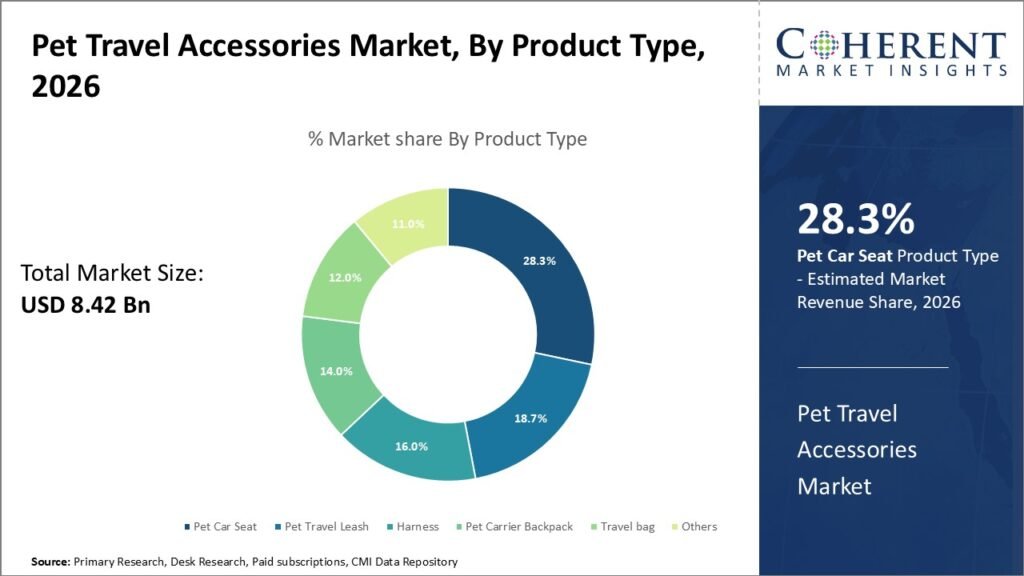
Source: Coherent Market Insights, 2026
As shown in chart above, the global pet travel accessories market is projected to reach $8.42 billion in 2026, with pet carriers and related containment products accounting for over 40% of total revenue (Coherent Market Insights, 2026). While the overall pet travel market is 59.8% online-dominated, this trend reverses completely for high-barrier, regulated products: offline specialty distribution channels hold 68% of the global IATA-compliant crate market share.
This structural advantage stems from two non-negotiable factors:
-
- Prohibitive logistics economics: For IATA-compliant crates, international shipping costs account for 25-30% of total landed cost, making cross-border parcel shipping 2.3 times more expensive than regional bulk distribution (Petrust, 2026). Even with maximum shipping subsidies, cross-border platforms cannot match the price point of authorized regional distributors.
-
- Strict regulatory liability: Non-compliant crates are routinely rejected at airports, resulting in missed flights, stranded pets, and massive legal liability for retailers. Only certified distributors can provide the compliance documentation and product guarantees that retailers require to mitigate this risk.
This structural cost premium and regulatory barrier means cross-border platforms will never be able to compete effectively in this category, no matter how much they subsidize shipping or undercut prices on standard commodities.
Beyond logistics, IATA crates require strict compliance with the latest 2026 IATA Live Animals Regulations (LAR), which mandate specific material strength, ventilation, locking mechanism, and labeling standards (International Air Transport Association [IATA], 2026). Non-compliant crates are routinely rejected at airports, resulting in missed flights, stranded pets, and massive liability risks for retailers who source from unvetted online sellers. In 2025 alone, European airlines rejected over 120,000 non-compliant pet crates, costing retailers an estimated €47 million in refunds and reputational damage (0x Cargo Pet Travel, 2026). As a certified distributor, you provide the critical compliance guarantee that no cross-border platform can match.
Barrier 2: Technical & Certification Barriers (4G Pet GPS Trackers & Health Monitors)
4G pet GPS trackers and integrated health monitors represent the second high-margin, high-barrier category that is almost entirely immune to cross-border price competition. These products require three non-negotiable capabilities that generic white-label sellers on Temu cannot deliver:
-
- Global cellular network certification: Reliable connectivity in 100+ countries requires Cat-M1/NB-IoT network certification, a process that takes 6-12 months and costs over $100,000 per product model when including regional regulatory approvals (Apple Ko, 2025).
-
- Stringent data privacy compliance: Handling sensitive pet location and health data requires full GDPR, CCPA, and PIPL compliance, with regular third-party audits and data security protocols.
-
- Local technical support: Device activation, troubleshooting, and warranty service require on-the-ground support in the local language, which cross-border platforms cannot provide.
Generic white-label GPS trackers sold on Temu fail on all three counts. They use outdated 2G networks that are being phased out in 90% of Western countries by 2027, lack proper data privacy certifications, and provide no post-sales support. A 2026 industry analysis found that 78% of retailers who tried sourcing low-cost GPS trackers from cross-border platforms experienced return rates above 40% due to connectivity issues, compliance failures, and lack of support (Pawbilt, 2026).
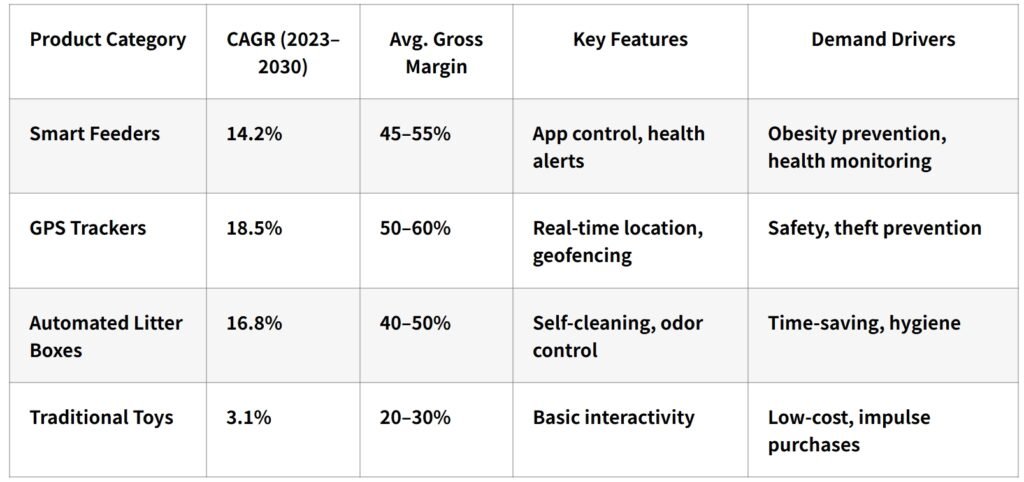
Source: Pawbilt, 2026
As shown in chart above, GPS trackers are the highest-growth and highest-margin segment in the global smart pet products market, with a compound annual growth rate of 18.5% and average gross margins of 50-60% (Pawbilt, 2026). In stark contrast, traditional pet commodities have CAGRs below 4% and gross margins of only 20-30%.
Professionally certified 4G pet GPS trackers delivered through authorized distribution channels perform even better, with return rates below 8% and consistent gross margins of 50-60% . These products also create recurring revenue opportunities through subscription-based health monitoring services, further increasing customer lifetime value. The global pet tech market is projected to grow at a CAGR of 9.5% through 2033, with North America holding 41.8% of the global market share—creating a massive opportunity for distributors who position themselves as trusted suppliers of certified, high-quality pet tech products (Persistence Market Research, 2026).
Barrier 3: Regulatory & Professional Service Barriers (2-in-1 Remote Dog Training Devices)
2-in-1 remote dog training devices represent the third and fastest-growing high-barrier category that is completely immune to cross-border price competition. Unlike basic training collars, professional-grade 2-in-1 devices that combine remote training and electronic fence functionality face insurmountable regulatory and service barriers that Temu sellers cannot overcome.
These products require three non-negotiable capabilities that generic white-label sellers cannot deliver:
-
- Regional regulatory compliance: The EU implemented a full ban on uncertified electric training collars in 2024, and 22 US states have enacted restrictions on improper use of shock collars. Only products with full CE, FCC, and IC certification, and human adjustable training modes (sound, vibration, and low-level static stimulation) can be legally sold in Western markets.
-
- Performance and durability requirements: Professional-grade training devices require 1000+ meter remote range, IPX7/IP66 waterproofing, and multi-dog support for up to 9 dogs. White-label products regularly exaggerate range claims, fail waterproof tests, and have failure rates above 35% within the first 6 months.
-
- Professional training and support: Retailers and end customers require hands-on training on proper device usage, behavior modification guidance, and local warranty service—none of which cross-border platforms can provide.
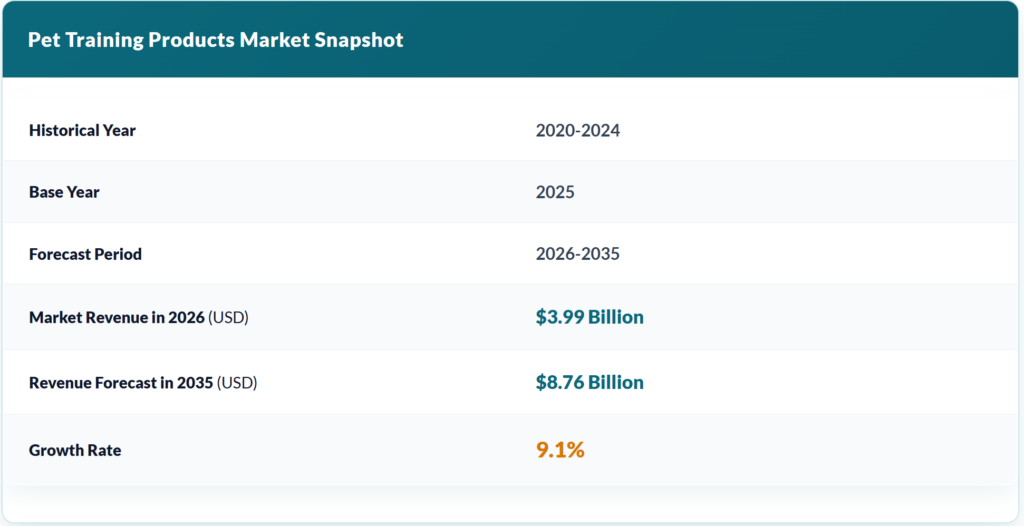
Source: Morgan Reed Insights, 2026
As shown in chart above, the global pet training products market is projected to reach $3.99 billion in 2026, growing at a CAGR of 9.1% through 2035 (Morgan Reed Insights, 2026). Compliance has become the single most important determinant of market success, with certified professional-grade products now accounting for 62% of total revenue. These products deliver consistent gross margins of 50-60% and return rates while below 10%, no certified white-label products have seen their market share collapse due to widespread regulatory bans and catastrophic customer satisfaction issues.
Cross-border platforms cannot compete in this category because they cannot guarantee regulatory compliance across different regions, nor can they absorb the liability risks associated with non-compliant products. A single sale of an uncertified electric training collar can result in administrative fines of up to €10,000 per unit in EU member states, with some countries imposing additional criminal penalties for repeat violations (Fédération Européenne des Industries de l’Alimentation Animale [FEDIAF], 2024). This makes it far too risky for retailers to source training devices from unvetted online sellers who cannot provide valid compliance documentation.
Conclusion: Redefining Your Value as a Strategic Supply Chain Partner
The traditional B2B pet product distribution model—built for decades on information asymmetry, regional warehousing advantages, and bulk purchasing power—has been irreversibly dismantled. As this report has documented, cross-border platforms have systematically commoditized 82% of mainstream pet supplies, driving wholesale margins for basic products below 12% in North American and European markets. Most alarmingly, 68% of global mid-sized distributors have seen their core commodity revenue decline by 25% or more since 2024, as retailers and even end consumers now source directly from Chinese factories via platform-integrated shipping solutions (360 Research Reports, 2026; Persistence Market Research, 2026).
The three high-barrier product categories outlined in this report represent the only sustainable competitive advantage remaining for global distributors. What unites these categories is not just their industry-leading 50%+ gross margins, but the fact that they all require capabilities that cross-border platforms can never replicate:
-
- Structural & compliance barriers: IATA-compliant pet travel crates benefit from an inherent 2.3x cost advantage for regional bulk distribution, and offline specialty channels control 68% of this market. Non-compliant crates resulted in €47 million in retailer losses in Europe alone in 2025 (Coherent Market Insights, 2026; 0x Cargo Pet Travel, 2026).
-
- Technical & certification barriers: 4G pet GPS trackers are the fastest-growing smart pet product segment with an 18.5% CAGR, but require $100,000+ in global network certification costs. Certified products have return rates below 8%, compared to over 40% for white-label alternatives (Pawbilt, 2026; Apple Ko, 2025).
-
- Regulatory & service barriers: The global pet training products market will reach $3.99 billion in 2026, with certified professional-grade products now accounting for 62% of total revenue. A single sale of an uncertified training collar can result in fines of up to €10,000 per unit in the EU (Morgan Reed Insights, 2026; Fédération Européenne des Industries de l’Alimentation Animale [FEDIAF], 2024).
This transformation requires three decisive, non-negotiable actions:
-
- Radically prune your product portfolio: Immediately discontinue all low-margin commodities that compete directly with cross-border platforms. These products are not just unprofitable—they are eroding your reputation as a trusted supplier of compliant, high-quality products.
-
- Concentrate all resources on high-barrier categories: Reallocate 100% of your marketing, sales, and inventory budget to the three categories outlined above. Become the undisputed expert in these niches rather than a generalist in a dying market.
-
- Partner with compliance-first manufacturers: Work with specialized manufacturers like Starvey Global that provide fully certified products, end-to-end global logistics support, and dedicated B2B sales and marketing tools. These partnerships allow you to leverage their regulatory and technical expertise while focusing on your core strength: building long-term relationships with retail customers.
The window of opportunity to make this shift is closing rapidly. Cross-border platforms are already attempting to enter these high-barrier categories, but they will never overcome their structural disadvantages. They cannot guarantee compliance across 100+ countries, they cannot absorb the catastrophic liability risks of non-compliant products, and they cannot provide the hands-on technical support and training that retailers and end customers require.
For distributors who act now, the future is exceptionally bright. The global pet industry continues to grow at a robust pace, and demand for certified, professional-grade products is stronger than ever. By repositioning yourself as a strategic supply chain partner and high-barrier product expert rather than a commodity reseller, you will not only survive the cross-border disruption—you will dominate your market for decades to come.