Dr. Lixing Chen, Global Business Strategy, Starvey Global
Abstract
The global working dog equipment sector is expanding rapidly, driven by growing demand from K9 security units, herding operations, service dog programs, and professional breeding facilities. For wholesale distributors and institutional procurement teams, the core challenges of 2026 lie in navigating fragmented regional regulatory frameworks, securing field-grade durable products, and maintaining supply chain consistency across training, tracking, and transport categories. This guide analyzes the current market landscape, breaks down key compliance standards for humane training equipment and IATA air transport, and provides a structured selection framework covering three core product lines: professional training collars, GPS health trackers, and IATA-compliant airline crates. It also outlines strategic sourcing practices to help B2B buyers reduce compliance risk, improve order profitability, and build long-term reliable supply partnerships.
Keywords: working dog equipment, K9 training gear, IATA pet transport, humane dog training, wholesale pet sourcing, service dog equipment, working dog logistics
1. Introduction
Working dogs—including K9 security units, search and rescue teams, livestock herding dogs, and service animals—perform mission-critical roles across public and private sectors globally. Unlike companion pet products, equipment built for working animals must meet far higher thresholds for durability, regulatory compliance, and operational reliability. For wholesale distributors, K9 training academies, ranch security providers, and professional breeding bases, selecting the right product portfolio is not a matter of brand preference; it directly impacts operational safety, animal welfare, and regulatory liability.
Global market projections indicate steady growth in the professional working dog gear segment through 2026, with particularly strong demand in North America, Europe, and the Middle East (PW Consulting, 2026). However, this growth is accompanied by tightening regulatory standards for both training practices and animal transport, creating a gap between low-cost consumer-grade products and the performance required by professional operators.
This guide is structured to provide procurement decision-makers with actionable, research-backed analysis. First, it examines current market dynamics and procurement pain points. Second, it breaks down the two highest-risk compliance domains: humane training equipment regulations and IATA live animal air transport standards. Third, it presents a durability-focused product selection framework across three core categories, with real-world product examples aligned to professional use cases. Finally, it offers strategic sourcing recommendations to optimize bulk purchasing operations.
2. Market Landscape and Procurement Challenges
The global market for working dog harnesses, vests, and related operational gear reached $592.5 million in 2025 and is projected to grow to $599.34 million in 2026, with a compound annual growth rate of 5.85% through 2032 (PW Consulting, 2026). This expansion is fueled by three key drivers: increased public sector investment in K9 units, growth in commercial service dog programs, and intensifying demand from large-scale livestock operations.
For wholesale distributors serving this space, three core challenges define the 2026 landscape:
First of all, regulatory fragmentation. Training equipment regulations vary widely across jurisdictions, with an increasing number of regions enacting restrictions on training tools (Bangura, 2026). Distributors carrying non-compliant products face not just lost sales but potential legal and reputation risk.
Secondly, durability expectations. Working dog gear operates in extreme conditions—extreme temperatures, moisture, rough terrain, and daily heavy use. Consumer-grade products fail rapidly in these environments, leading to high return rates and eroded customer trust.
Thirdly, supply chain consistency. Professional buyers require uniform quality across large batch orders and reliable re-supply timelines. Many low-cost manufacturers lack standardized quality control, creating variability that is unacceptable for institutional and commercial clients.
3. Core Compliance Standards for Professional Working Dog Gear
3.1 Humane Training Equipment Regulatory Landscape
The regulatory shift toward humane training practices is the single most important trend shaping the professional dog training equipment market. As of 2026, 27 jurisdictions globally have enacted formal restrictions on aversive training devices, and major veterinary bodies worldwide have issued formal position statements opposing the use of uncontrolled electric pulse training tools (Bangura, 2026).
For distributors serving K9 units, herding operations, and service dog programs, this means products must support adjustable, graduated stimulation levels and align with positive reinforcement training frameworks. Equipment that offers only fixed, high-intensity stimulation is not only banned in an expanding list of regions but also rejected by professional training bodies that prioritize humane, science-based practices.
Moreover, compliant training tools do not mean less effective tools. Professional-grade systems that offer sound, vibration, and finely adjustable static stimulation—used according to certified training protocols—remain legal and widely accepted in most jurisdictions, and are preferred by professional handlers for their precision and reliability.

3.2 Air Transport Compliance for Working Dogs
For working dogs that travel across regions—whether for deployment, training rotations, or breeding programs—air transport compliance is non-negotiable. The IATA Live Animals Regulations (LAR), updated annually, set the global standard for all commercial air transport of live animals, and the 52nd edition effective in 2026 includes specific provisions for working dogs such as rescue dogs, drug-sniffing dogs, and service animals (International Air Transport Association [IATA], 2026).
Key requirements for working dog transport containers include:
Construction from rigid, durable materials (fiberglass, metal, rigid plastic, or solid wood) with no sharp internal protrusions
- Ventilation openings sized to be nose- and paw-proof, with a maximum of 25mm x 25mm for dogs
- Welded wire mesh doors with a minimum thickness of 2.5mm for canine transport
- Secure locking mechanisms that cannot be opened by the animal during transit
- For certain working dog breeds and high-risk categories, additional structural reinforcement is required (IATA, 2026)
Standard consumer pet carriers almost universally fail to meet these standards. For distributors serving working dog clients, supplying IATA-compliant crates is not a value-add; it is a baseline requirement to avoid denied boarding, shipment delays, and animal safety incidents.
4. Durability-Focused Product Selection Framework
For professional working dog operations, equipment failure is not an inconvenience—it is an operational and safety risk. The following framework outlines performance benchmarks for three core product categories, with corresponding product examples engineered for professional field use.
4.1 Professional Training Collars: Built for High-Intensity Field Use
Training collars are the most heavily regulated and most frequently used tool in working dog programs. The ideal system delivers reliable long-range performance, fully adjustable stimulation levels, and all-weather durability.
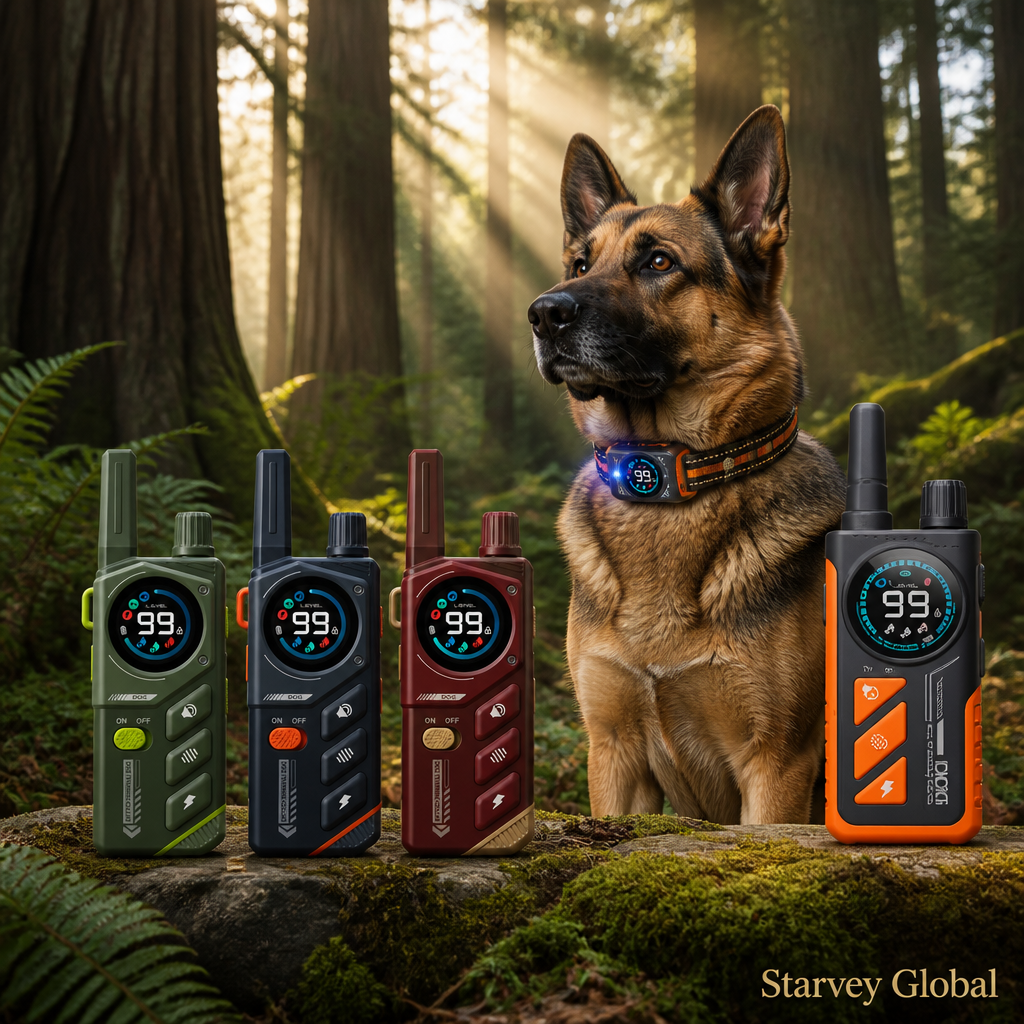
The Starvey Global SG-TR-PD509-TIO and SG-TR-PD511-TIO professional training systems are engineered specifically for this use case. Both systems offer a 1000-meter working range, sufficient for large properties, open-range herding, and K9 field training. With 9 distinct sound cues, 16 adjustable vibration levels, and 99 finely tunable static stimulation levels, they allow handlers to match correction intensity to each dog’s size, temperament, and task—supporting humane, precision-focused training aligned with modern professional standards. Additional features include an AI-powered auto anti-bark mode, built-in LED flashlight for low-light operations, and clear color display for at-a-glance battery and setting checks.
Built for real-world field conditions, both systems carry an IPX7 waterproof rating, meaning rain, mud, and water work do not interrupt operations. A single 2-hour charge delivers up to 180 days of standby power for the remote and 60 days for the collar receiver, reducing downtime and charging frequency during multi-day deployments. Each system controls one dog out of the box and expands to manage 2–3 dogs with additional receivers, making them scalable for packs and multi-dog operations.
4.2 GPS Tracking and Geofence Systems for Field Operations
For working dogs operating in large, open areas—ranches, search and rescue zones, and security perimeters—real-time location tracking is a critical safety and operational tool. Basic consumer trackers lack the battery life, signal reliability, and build quality for sustained field use.
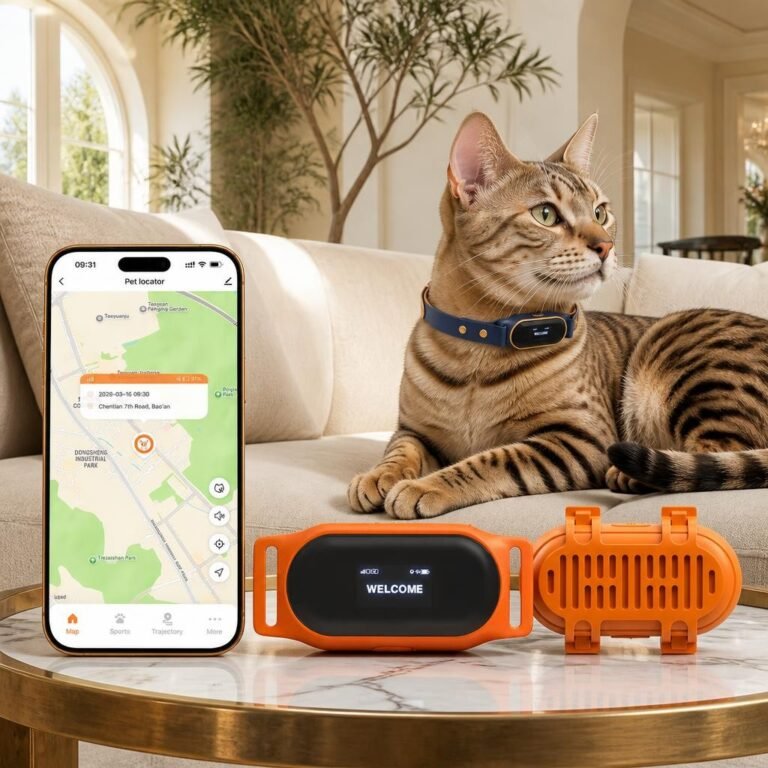
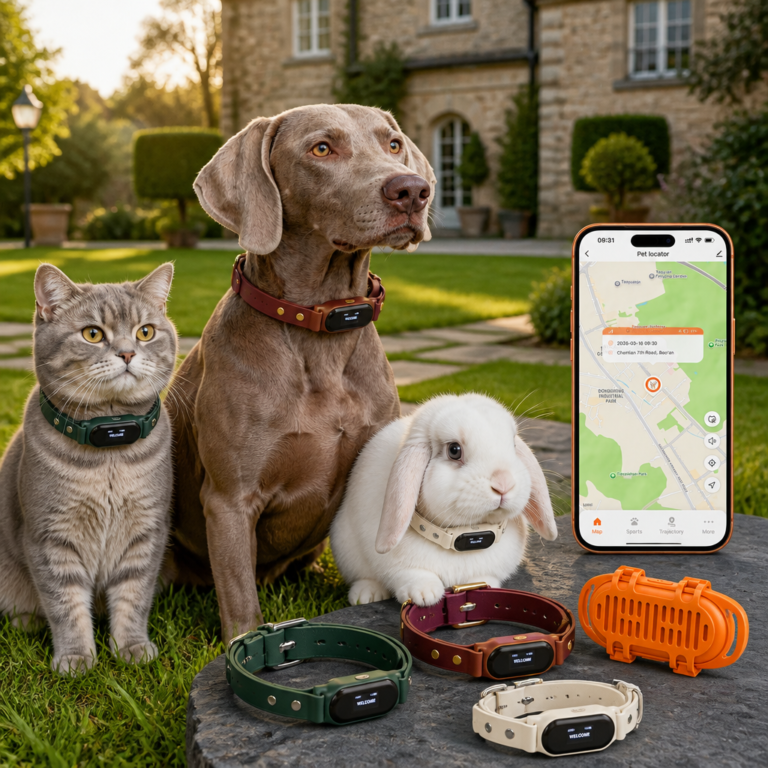
The Starvey Global SG-GPS-CB-C08PLUS GPS pet collar is designed to meet this demand. It combines 4G multi-mode real-time tracking via GNSS, GPS, LBS, and WiFi technologies for fast, accurate location updates both indoors and in remote outdoor areas. Handlers can set customization virtual geo-fence safe zones, share live location with team members, and review historical movement data—essential features for herding management, search and rescue missions, and perimeter security patrols.
Beyond location tracking, the device monitors daily activity metrics including steps, sleep patterns, calories burned, and distance traveled, enabling proactive health management for working animals. Its defining feature is the integrated electronic ID tag with voice recording capability, allowing anyone who encounters a lost working dog to play the handler’s recorded message and facilitate a fast reunion.
Built for all-weather field operation, it features IP66 waterproofing with an ultrasonically sealed housing and delivers 10+ days of ultra-low-power standby life. Powered by the Tuya Smart platform from a US-listed company, full app access is provided with zero monthly subscription fees, an important cost consideration for bulk fleet deployments. The detachable alert module also allows handlers to reduce weight and bulk for everyday wear, prioritizing humane, low-burden comfort for the animal.
4.3 IATA-Compliant Crates for Cross-Regional Working Dog Transport
Working dogs regularly travel between training facilities, deployment sites, and breeding programs. Transport crates must protect the animal, withstand cargo handling, and pass airline compliance checks without exception.
The Starvey Global SG-CR-Series premium airline crates are engineered to meet full IATA Live Animals Regulations standards, making them suitable for commercial air transport of working and service dogs. Constructed from food-grade PP material with reinforced structural integrity and heavy-duty metal grid doors, they are built to withstand the rigors of multi-leg air cargo and ground handling while maintaining proper ventilation and secure containment.
Each unit comes standard with detachable bottom transport casters for smooth ground transfer, a hang-on water dispenser, and a dedicated transit food bowl—purpose-built accessories that streamline handling for logistics teams and ensure consistent access to food and water during long relocations. For working dog programs with multiple size classes, the full Starvey Global crate lineup offers nine size variants, all built to the same IATA-compliant specification, allowing distributors to offer a complete size range with uniform quality and compliance.
All crates are manufactured in a BSCI-audited facility with standardized quality control across production runs, ensuring consistent build quality for bulk orders. This uniformity is critical for institutional buyers and logistics providers that require predictable performance across their entire fleet.
5. Strategic Sourcing and Supply Chain Optimization for Bulk Buyers
For wholesale distributors and institutional procurement teams, product selection is only half the equation. The following strategies help optimize sourcing operations, reduce risk, and improve long-term profitability.
First of all, prioritize certified, audit-backed manufacturers. Regulatory compliance and product consistency cannot be verified from product photos alone. Working with suppliers that hold formal certifications—including IATA compliance for transport products and BSCI auditing for manufacturing facilities—reduces compliance risk and ensures batch-to-batch quality consistency.
Secondly, adopt a bundled solution approach. Instead of selling training collars, trackers, and transport crates as separate SKUs, position them as integrated working dog kits for specific use cases: K9 deployment kits, ranch herding packages, or service dog relocation sets. This increases average order value, deepens customer relationships, and reduces competitive pressure on individual products.
Thirdly, build inventory around universal compliance. Regional regulatory differences will continue to evolve. Products designed to meet the strictest global standards—such as fully adjustable training systems and IATA-certified crates—remain sellable across markets, reducing the risk of inventory obsolescence as regulations change.
6. Conclusion
The working dog equipment market offers strong growth potential for wholesale distributors that can navigate the dual demands of regulatory compliance and field-grade durability. Success in 2026 and beyond will not go to suppliers with the lowest prices, but to partners that understand the operational realities of professional handlers, can verify compliance across jurisdictions, and deliver consistent, reliable products that perform under real-world conditions.
By focusing on the three core categories of professional training systems, GPS tracking gear, and IATA-compliant transport crates, and by sourcing from manufacturers with proven certification and quality control, distributors can build a high-value, low-risk product portfolio tailored to the fastest-growing segments of the professional pet industry.