
By Dr. Lixing Chen (Star Lee), DBA | Global Business Strategy, Starvey Global
Abstract
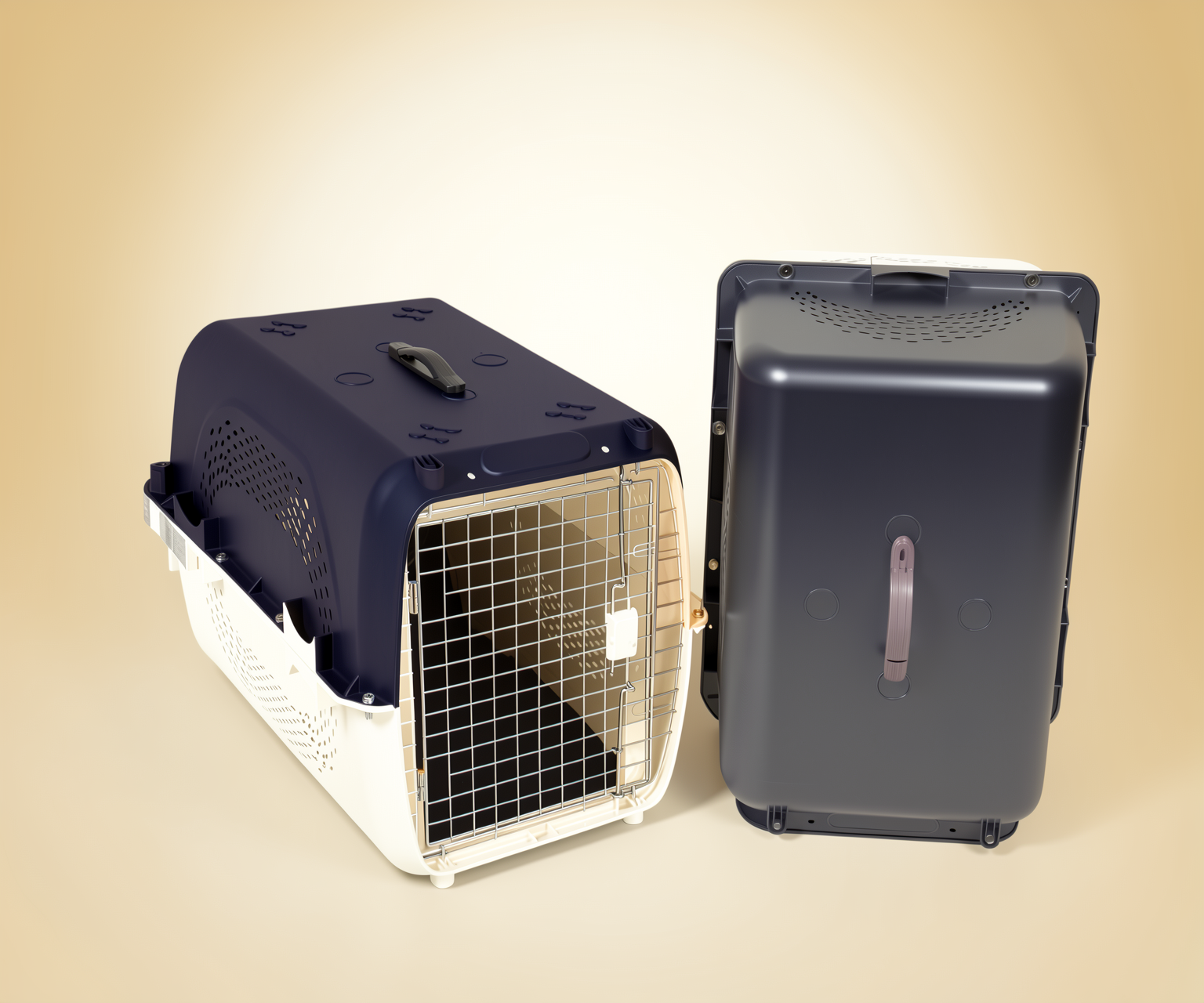
Drawing from field research conducted at Pet Fair Vietnam 2026 in Ho Chi Minh City, this paper examines the structural supply-demand mismatch of IATA-compliant pet air crates in Vietnam’s fast-growing pet relocation sector. On-site interviews with leading pet transport operators including Daisy Pet Transport confirm that most Chinese-manufactured crates fail to meet the full ventilation, structural, and mesh size standards required by EU, Australian, and North American airlines, forcing local firms to source inventory at high cost from European suppliers.
This article unpacks the core regulatory framework outlined in the 51st edition of IATA Live Animals Regulations, analyzes the growth trajectory of Vietnam’s pet industry, and provides actionable strategic guidance for wholesale distributors seeking to capture market share in Southeast Asia’s fastest-growing pet economy. Findings indicate that properly certified, cost-competitive compliant crates represent a high-margin, underserved market niche with strong long-term demand fundamentals.
Introduction
Southeast Asia has emerged as one of the world’s fastest-growing regional pet care markets, driven by rapid urbanization, rising disposable incomes, and a cultural shift toward pet humanization across major economies (Morgan Reed Insights, 2026). Among these markets, Vietnam stands out with a projected compound annual growth rate (CAGR) of 14.6% through 2035, outpacing regional peers such as Thailand and Indonesia (Morgan Reed Insights, 2026). As cross-border pet relocation services expand between Vietnam and Western markets including the European Union, Australia, and North America, compliance with international air transport standards has become a non-negotiable operational requirement for local service providers.
Field observations and stakeholder interviews conducted during the June 2026 Pet Fair Vietnam exhibition in Ho Chi Minh City reveal a critical market gap. While Vietnamese pet relocation firms acknowledge China’s cost advantage in pet product manufacturing, the majority of domestically available Chinese air crates do not satisfy the full set of IATA (International Air Transport Association) standards enforced by major international airlines. As a result, operators such as Daisy Pet Transport currently source premium compliant crates from Europe and Australia, bearing significantly higher unit costs, longer lead times, and elevated inventory risk. This dynamic creates a clear strategic opportunity for wholesale distributors that can deliver fully certified, IATA-compliant crates at competitive price points.
This article proceeds in four sections. First, it outlines the core regulatory framework governing international pet air crates, including mandatory specifications for ventilation, door mesh dimensions, and structural integrity. Second, it analyzes the supply-demand imbalance in Vietnam’s pet relocation market based on primary field research. Third, it presents market growth data and long-term outlook for pet travel products in Southeast Asia. Fourth, it concludes with strategic implications for B2B wholesale distributors and a technical FAQ addressing common compliance questions.
Core Regulatory Framework for International Pet Air Crates
The global standard for live animal air transport is defined by the IATA Live Animals Regulations (LAR), currently in its 51st edition effective January 2025. All major international airlines, including those operating routes between Vietnam and EU/Australian destinations, enforce these specifications as a condition of cargo acceptance (IATA, 2025). Non-compliant crates result in automatic boarding denial, shipment delays, and potential liability for transport operators. Three sets of specifications are the most frequent points of failure for low-cost un-certified crates.
Ventilation Requirements
IATA mandates that pet cargo crates provide ventilation on all four sides, with ventilated openings accounting for a minimum of 16% of the total surface area of each side wall. Ventilation openings on the side and rear panels must be positioned across the upper two-thirds of the crate wall to ensure airflow reaches the animal’s breathing zone, while the front door must provide full-height ventilation (IATA, 2025). Cathay Cargo (2026) and other Asia-Pacific carriers further specify that roof ventilation is permitted and encouraged for long-haul routes. A common deficiency among budget crates is ventilation on only three sides, or total ventilated area falling below the 16% threshold, which leads to immediate rejection at airport cargo check-in.
Door and Mesh Safety Specifications
All metal mesh openings must be nose-proof and paw-proof to prevent injury to animals and handling personnel. For dog crates, maximum mesh opening size is 25 mm × 25 mm; for cat crates, the limit is 19 mm × 19 mm (IATA, 2025). SWISS (2026) and Air Canada Cargo reinforce this requirement, noting that mesh must be constructed from thick-gauge welded wire, not lightweight woven mesh that can be deformed by biting or scratching. Many budget Chinese crates use wider mesh spacing to reduce material costs, making them unsuitable for international routes even if they appear visually similar to compliant models.
Structural Integrity and Fastening Standards
IATA requires rigid construction using fiberglass, metal, rigid plastic, or solid wood, with upper and lower crate halves secured by metal nuts and bolts rather than plastic clips. Plastic snap fasteners are explicitly prohibited for international cargo transport, as they can fail under turbulence or rough handling (IATA, 2025). For crates weighing over 60 kg including the animal, additional metal bracing is mandatory (Air Canada Cargo, 2025). Australian biosecurity and airline rules impose even stricter structural requirements, mandating corrosion-resistant metal hardware and leak-proof sealed bases to meet quarantine entry standards (PetFlyers, 2026).
Supply-Demand Mismatch in the Vietnamese Pet Relocation Market
Field interviews conducted in Ho Chi Minh City confirm that the gap between rising demand for compliant crates and inadequate local supply has created significant operational friction for Vietnamese pet relocation businesses.
Demand Side: Growing International Relocation Volume
Vietnam’s expanding middle class and increasing expatriate mobility have driven double-digit growth in cross-border pet transport services, particularly on routes to Europe, Australia, and North America (Vietnam News, 2026). For pet transport operators, crate compliance is not a competitive differentiator but a baseline requirement to do business. Operators that fail to use certified crates face repeated cargo rejection, reputational damage, and lost client accounts. As international route volume increases, demand for reliably compliant crates will continue to outpace supply from traditional low-cost sources.
Supply Side: The Compliance Gap in Chinese-Manufactured Crates
Interviews with Daisy Pet Transport management confirm that the company has evaluated multiple Chinese crate suppliers but found that the majority do not meet full IATA specifications for long-haul international routes. Common shortcomings include insufficient ventilation area, plastic clip fasteners, and oversize mesh openings—flaws that are invisible to untrained buyers but result in automatic airline rejection. As a workaround, the company currently imports compliant crates from European manufacturers, paying significantly higher unit prices, enduring 6–8 week lead times, and carrying larger safety stock to avoid stock out.
This supply dynamic is representative of a broader pattern across Southeast Asia: while China dominates global pet product manufacturing, much of its export output targets price-sensitive domestic and regional markets, not the strict regulatory requirements of Western air carriers. For wholesale distributors, this creates an arbitrage opportunity: working directly with factories to produce fully IATA-certified crates, and supplying them to Southeast Asian operators at a price point that undercuts European imports while still delivering healthy margins.
Market Growth Outlook for Southeast Asian Pet Travel Products
The long-term demand trajectory for compliant pet travel products is supported by strong structural growth in Southeast Asia’s pet care sector.
Regional and National Market Scale
Morgan Reed Insights (2026) values the total Southeast Asian pet care market at $8.19 billion in 2026, projected to reach $22.66 billion by 2035 at an 11.97% CAGR. Vietnam is the fastest-growing national market in the region, with a total pet industry value of $1.3 billion in 2026 and a projected CAGR of 14.6% through 2035, fueled by urbanization in Ho Chi Minh City and Hanoi, rising youth pet ownership, and expanding veterinary infrastructure (Morgan Reed Insights, 2026).
Pet Products Segment Forecast
Within the broader pet care industry, pet travel and transport products represent a high-growth niche tied to increasing mobility and pet humanization. Figure 1 illustrates the projected growth of Vietnam’s pet products market from 2025 to 2034, with steady expansion across accessories, travel gear, and tech-enabled pet care categories.

The chart is available for full-resolution download directly from the source report page above. As pet ownership penetration rises and international travel normalizes, demand for IATA-compliant travel crates will grow disproportionately faster than the general pet products average, as regulatory enforcement continues to tighten globally.
Strategic Implications for Wholesale Distributors
For B2B pet product distributors targeting the Vietnamese and broader Southeast Asian market, the IATA-compliant crate segment represents a high-barrier, high-margin opportunity that avoids the price competition of commodity pet supplies. Three strategic priorities emerge from this analysis.
First of all, product certification must be non-negotiable. Distributors should verify full compliance with IATA LAR 51st edition standards with factory partners, including independent third-party testing where possible. Marketing and sales materials should clearly document compliance specifications, as this is the primary decision criterion for professional pet transport operators.
Secondly, positioning should emphasize total cost savings over European imports. Vietnamese operators are acutely aware of the price premium they pay for European crates. A well-positioned Chinese-made compliant alternative priced 30–40% below European equivalents, with faster delivery times, will have immediate market traction.
Thirdly, value-added services drive long-term loyalty. Offering OEM private-label customization, supporting client factory audits, and providing full compliance documentation for airline approval transforms distributors from product vendors into strategic supply partners. This is particularly valuable in the Vietnamese market, where relationship trust is a core driver of B2B purchasing decisions.
Conclusion
Field research from Ho Chi Minh City confirms that Vietnam’s rapidly expanding pet relocation market faces a structural shortage of affordable, fully IATA-compliant pet air crates. Current market incumbents rely on high-cost European imports to meet EU and Australian airline requirements, while most lower-cost Chinese products fail critical regulatory standards. This supply-demand mismatch represents a high-value strategic opportunity for B2B wholesale distributors that can deliver certified, regulation-aligned products at competitive price points.
Looking ahead, Southeast Asia’s pet care market will continue its double-digit growth trajectory, and cross-border pet transport volumes will rise in lockstep. Distributors that enter the market now with properly certified products, strong compliance documentation, and customer-centric service will establish first-mover advantage and build long-term partnerships with the region’s leading pet transport operators. For Starvey Global and similar firms, the Vietnamese market offers a proven entry point into the broader Southeast Asian pet travel product ecosystem, with clear pathways to scale across additional product categories over time.