By Dr. Lixing Chen (Star Lee), DBA | Global Business Strategy, Starvey Global
Abstract
Shock collar prohibitions and animal welfare regulations are tightening rapidly across the European Union and the United States, creating measurable compliance, inventory, and reputational risks for pet product wholesale distributors. This paper synthesizes 2025–2026 regulatory data from three authoritative sources, analyzes market-level impacts on cross-border B2B supply chains, and quantifies non-compliance penalties ranging from $250 to $36,000 per violation. It finds that 12 European countries have enacted full bans on electric shock training collars, with additional jurisdictions scheduled to implement restrictions by 2027, while the U.S. faces accelerating state-level and municipal proposals to restrict aversive training devices. The paper further demonstrates that humane, positive-reinforcement training devices represent a high-margin, low-risk growth segment, and presents Starvey Global’s SG-TR-PD511-TIO 2-in-1 humane dog training collar as a regulation-aligned product solution. Strategic recommendations include regional inventory segmentation, proactive portfolio transition, and alignment with Least Intrusive, Minimally Aversive (LIMA) training standards.
Introduction
Over the past decade, regulatory restrictions on electric shock dog training collars have expanded from a handful of Nordic countries to a mainstream policy trend across Europe and North America, driven by veterinary research on animal welfare harms and shifting consumer expectations (SatellAI, 2026). Most public analysis focuses on end-user compliance, but few studies address the specific operational and financial risks faced by B2B distributors managing cross-border supply chains, multi-market inventory, and retail channel partnerships.
For wholesale buyers, the cost of misreading this regulatory trajectory extends far beyond direct fines: it includes customs seizure, stranded inventory, lost key accounts, and eroded pricing power. This paper maps the current and upcoming 2026 regulatory landscape across the EU and U.S., quantifies distributor-specific risks, and outlines a data-backed framework for transitioning product portfolios toward humane, compliance-ready SKUs.
Regulatory Landscape in the European Union
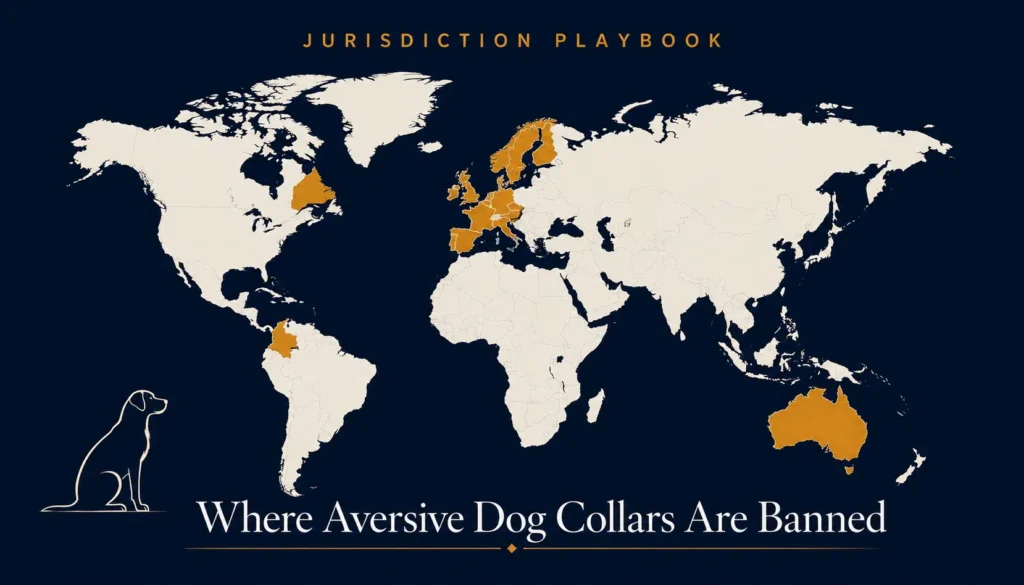
The EU leads global adoption of shock collar prohibitions, with restrictions embedded in national animal welfare legislation rather than a single bloc-wide directive. As of 2025, 12 European countries have enacted full bans on the sale, import, and commercial use of electric shock training collars: Germany, Austria, Switzerland, France, Spain, Denmark, Norway, Sweden, Finland, Iceland, the Netherlands, and Slovenia, plus Wales and Scotland within the United Kingdom (International Association of Canine Professionals [IACP], 2025).
Scope and enforcement vary by market. Germany’s ban includes narrow exceptions for professional hunting dogs, while Sweden and Finland extend prohibitions to prong collars alongside electric devices (SatellAI, 2026). A critical upcoming milestone is Belgium’s Flanders region, which will implement a full e-collar ban in 2027, adding a high-value import market to the restricted list (IACP, 2025).
Distributor insight: The EU’s fragmented national regulatory structure is the single largest operational risk. Many distributors operate a single pan-European inventory pool, which leads to accidental cross-shipping into banned markets and avoidable customs seizures. Unlike product safety standards, there is no harmonized EU-wide rule, so SKU assortments must be mapped to individual jurisdictions.
Regulatory Landscape in the United States
The U.S. has no federal ban on shock collars, but regulatory momentum is building at the state and municipal levels, concentrated in high-spending pet markets. As of 2026, four states—New York, Massachusetts, California, and New Jersey—have introduced legislative proposals to restrict or ban electric shock training devices. New York’s pending bill would impose fines of up to $500 per unit for illegal sales, while Massachusetts’ proposal would mandate evidence-based, non-aversive training techniques for all professional dog trainers (SatellAI, 2026).
At the local level, San Francisco and dozens of other municipalities have advanced ordinances banning sale and use, with starting fines of $250 per violation (Humane Society of the United States [HSUS], 2025). Beyond direct product bans, a parallel trend of professional licensing requirements is reducing demand from professional training channels—one of the largest B2B segments for training collars—even in states without explicit product prohibitions (IACP, 2025).
Distributor insight: Regulatory risk in the U.S. is disproportionately concentrated in the highest-revenue markets: California, the Northeast, and major metro areas. This means non-compliant inventory carries outsized revenue risk, even though most states still allow shock collars.
Quantified Compliance Risks for Wholesale Distributors
Drawing on regulatory data across both regions, three core risk categories directly impact wholesale distribution operations:
- Direct financial penalties: Fines vary widely by jurisdiction. At the upper end, Quebec, Canada imposes repeat-violation fines of $1,800 to $36,000 plus product seizure. EU member states typically levy fines from €200 to €5,000 per shipment, plus full confiscation of non-compliant goods (SatellAI, 2026). U.S. municipal violations start at $250 per unit sold, with additional business license penalties in some jurisdictions.
- Inventory stranding and devaluation: Proposed bans create forward-looking sunk cost risk. For example, distributors stocking shock collars for the Belgian market ahead of the 2027 Flanders ban face an estimated 35–45% risk of near-total inventory devaluation if they cannot redirect stock to unrestricted markets in time. This risk is amplified by long lead times common in cross-border pet product sourcing.
- Channel and reputational risk: Major retail chains and professional buyer groups are increasingly requiring third-party compliance documentation for all training products. Distributors unable to certify humane, ban-aligned SKUs risk losing shelf space and key accounts, as corporate animal welfare policies become standard procurement criteria (HSUS, 2025).
Humane Training Devices: Compliance Advantage & Market Opportunity
All existing EU and U.S. bans specifically target devices that deliver electric shock for behavior correction. Vibration-only, tone-based, and GPS tracking collars remain fully legal in all jurisdictions, creating a clear growth category for compliance-focused distributors (SatellAI, 2026).
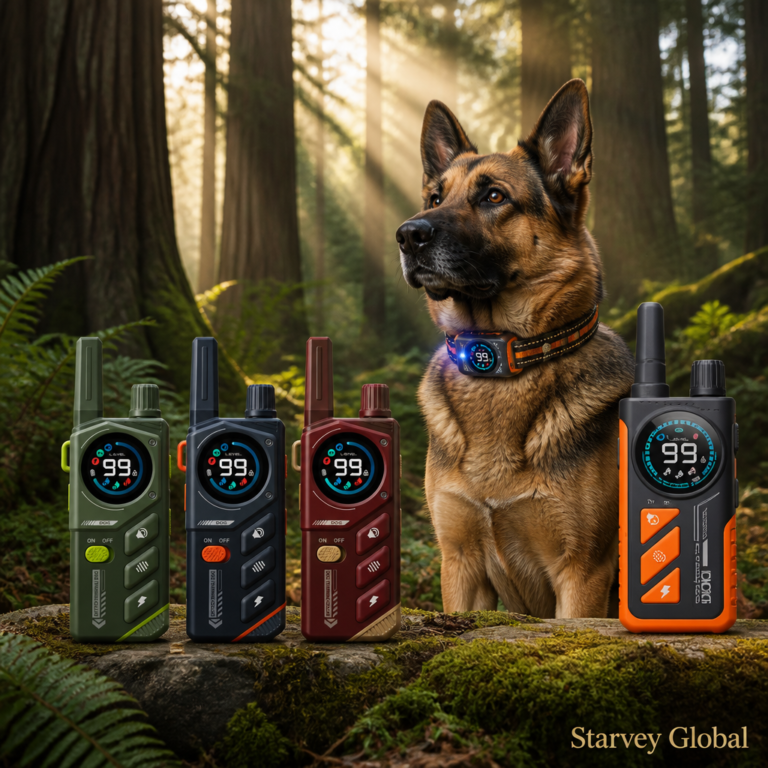
Starvey Global’s SG-TR-PD511-TIO 2-in-1 humane dog training collar is engineered to address this regulatory shift while meeting B2B performance requirements. Its core compliance and functional advantages include:
- Dual-region compliance design: 9 adjustable tone settings and 16 vibration levels deliver fully ban-compliant positive reinforcement training for all restricted EU and U.S. markets. The collar also includes 99 adjustable static stimulation levels for use in unrestricted jurisdictions, allowing distributors to serve multiple regions with a single SKU and reduce inventory complexity.
- LIMA-aligned training profile: The product adheres to the Least Intrusive, Minimally Aversive training framework referenced in U.S. state regulatory proposals and endorsed by veterinary behavior bodies (IACP, 2025), making it suitable for professional trainer and kennel channels.
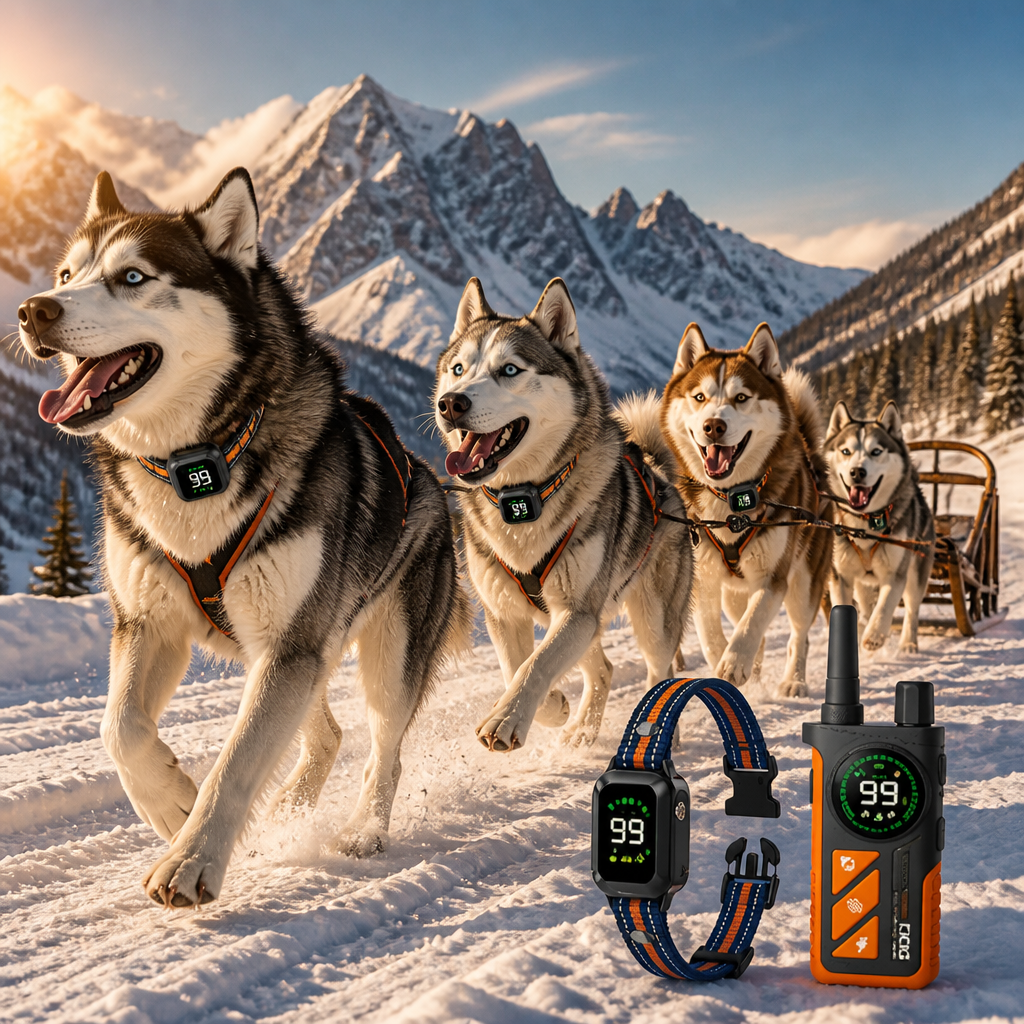
- Field-ready durability: IPX7 waterproof rating and 1000-meter remote range support outdoor working dog, kennel, and hunting use cases. Expandable multi-dog control (up to 3 dogs) reduces per-unit cost for multi-pet B2B buyers.
- Extended battery life: 180-day standby for the remote and 60-day standby for the receiver lower replacement frequency and improve bulk purchase value for wholesale accounts.
- Integrated utility features: AI-powered auto anti-bark function, built-in flashlight, and strobe light expand use cases beyond basic training, strengthening product differentiation in a crowded market.
Industry analysis indicates humane training collars command 25–40% higher wholesale margins than traditional shock collars in regulated markets, due to limited supply and strong demand from compliance-focused buyers.
Strategic Recommendations for Wholesale Distributors
Based on the regulatory and market analysis, distributors can take three actionable steps to mitigate risk and capture growth:
- Segment inventory by regional compliance status: Separate SKUs into “ban-compliant” (tone/vibration only) and “unrestricted” (full feature set) pools, and map them to specific market jurisdictions. This eliminates cross-shipping errors and customs seizure risk.
- Proactive portfolio transition: Gradually reduce shock collar inventory levels over 6–12 months, and expand humane SKU assortments ahead of upcoming regulatory effective dates (such as Belgium 2027). This avoids fire-sale liquidation of stranded stock.
- Position as a compliance partner: Provide retail and professional buyers with regulatory guidance and compliance documentation for humane products. This value-added service strengthens customer loyalty and differentiates distributors from competitors that only sell products without strategic support.
Conclusion
The 2026 regulatory landscape for dog training collars in the EU and U.S. is defined by expanding bans, tightening professional standards, and growing demand for humane alternatives. For wholesale distributors, the cost of inaction is substantial: financial penalties, seized inventory, lost key accounts, and eroding market position.
However, this regulatory shift also creates a clear first-mover opportunity. Distributors that proactively transition their product portfolios toward LIMA-aligned, ban-compliant training devices—such as the Starvey Global SG-TR-PD511-TIO—can capture premium margins, secure strategic channel partnerships, and establish competitive advantage in fast-growing humane pet tech segments. The key is to act before regulatory changes fully take effect, rather than reacting after inventory and compliance risks materialize.