Dr. Lixing Chen
Starvey Global | Professional Pet Tech Wholesale Solutions
Abstract
The Latin American smart connected pet collar market is entering a phase of accelerated expansion, fueled by rising pet humanization, high urban lost-pet rates, and fast-growing e-commerce penetration across core markets such as Brazil and Argentina. However, most cross-border distributors and Mercado Libre sellers face consistent, underdiscussed barriers to scaling: poor regional cellular compatibility, insufficient battery life, consumer rejection of subscription-based models, and ambiguous import compliance rules.
Drawing on real-world field testing data of the Starvey Global SG-GPS-CB-C08 and SG-GPS-CB-C08PLUS 4G humane pet trackers with Argentine commercial partners, this paper analyzes core market growth drivers, technical and operational pain points for importers, and actionable product sourcing strategies. It concludes that region-optimized hardware, zero-subscription software architecture, and flexible data integration options are the three defining competitive advantages for wholesale players targeting Latin America in 2026 and beyond.
Latin America Smart Pet Collar Market: Growth Trajectory and Structural Drivers
The Latin American pet technology sector is outpacing many mature North American and European markets in year-over-year growth. According to Market Data Forecast (2026), the Latin America smart connected pet collar market reached a valuation of USD 20.27 million in 2025, is estimated to hit USD 22.18 million in 2026, and is projected to grow at a compound annual growth rate (CAGR) of 9.5% through 2034, reaching USD 45.85 million by the end of the forecast period.
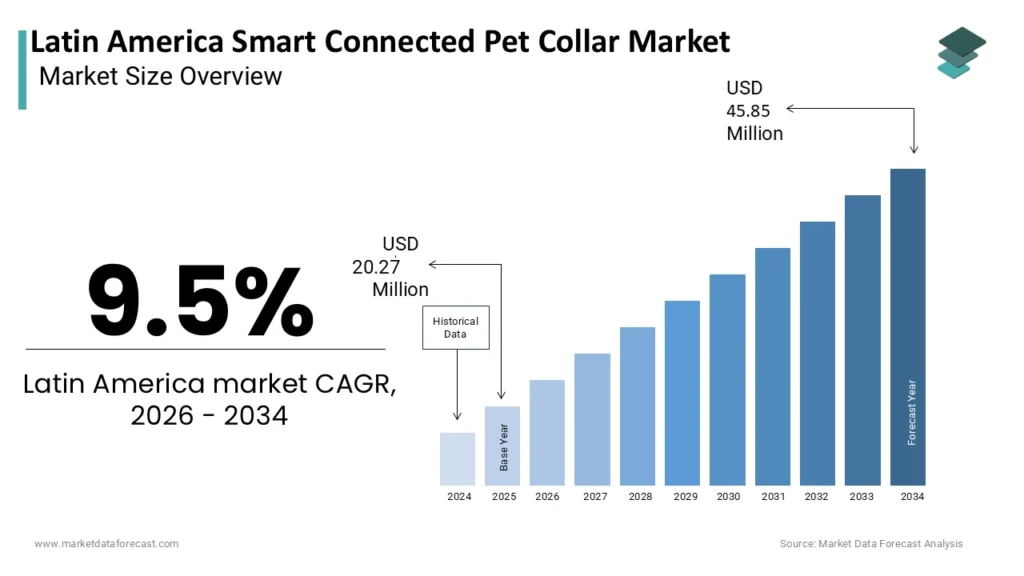
Three structural forces underpin this sustained growth. First, pet humanization is deeply entrenched across the region: pets are widely treated as core family members, which drives steady spending growth on pet safety, health and wellness products (Market Data Forecast, 2026). Second, high rates of stray and lost pets in dense urban areas create persistent, unmet demand for reliable real-time location tracking, especially in large metropolitan zones of Brazil, Argentina and Chile. Third, online retail is expanding faster than offline channels; the e-commerce segment for pet tech is expected to grow at a 10.6% CAGR through the forecast period, opening direct scaling opportunities for third-party sellers on platforms such as Mercado Libre (Market Data Forecast, 2026).
From a wholesale perspective, this growth creates a clear market window — but it also carries underrecognized risks. Most off-the-shelf 4G pet GPS collars on the global market are tuned for European or North American frequency bands, and fail to deliver stable connectivity when deployed in Latin American networks. This hardware mismatch leads to high return rates, damaged seller ratings and wasted inventory investment — a pattern we have documented directly through pilot testing with our partner network in Argentina.
Regional Technical Barriers: LTE Band Compatibility and the Argentine Market Case
For any 4G pet GPS collar to perform reliably in Latin America, purpose-built cellular module optimization is not optional. The region has a fragmented spectrum landscape, with each country prioritizing different LTE-FDD bands based on its carrier infrastructure.
Our on-ground validation work with the SG-GPS-CB-C08 tracker series in Argentina confirms that the bands critical for stable nationwide coverage are B5 (850 MHz), B7 (2600 MHz), B8 (900 MHz) and B28A — the commercially deployed 700 MHz subset used by all major Argentine carriers. Many generic “global version” trackers only carry European-standard band configurations and skip full B28A optimization, resulting in frequent signal drops in suburban and rural areas.
Notably, some first-time Argentine importers initially request support for B2 (1900 MHz) and B4 (1700/2100 MHz AWS) bands based on legacy network assumptions. In practice, modern Argentine LTE networks have shifted their primary coverage footprint to B5, B7, B8 and B28A. For nearly all wholesale and retail deployments, a dedicated Latin America SKU — such as the standard Latin America configuration of the SG-GPS-CB-C08 — delivers sufficient coverage for over 95% of populated areas. Custom hardware modifications to add B2/B4 support are only economically justifiable for very high-volume orders (1,000 units or more), due to module redesign and re-certification costs.
This band compatibility gap is one of the most common failure points for new market entrants. Many distributors source generic inventory from global B2B platforms, only to discover systemic connectivity issues after goods clear customs. For Mercado Libre sellers in particular, this type of product defect can destroy organic search rankings and customer trust in a matter of weeks.
Product Strategy for Latin America: Features That Drive Wholesale Traction
Beyond cellular optimization, three product attributes determine long-term success for pet GPS collars in Latin American wholesale markets, aligned with both end-consumer preferences and B2B distributor operational needs.
3.1 Zero-Subscription Humane Design Architecture
Subscription-based tracking models, popular among premium European brands such as Tractive (Market Data Forecast, 2026), consistently underperform across most Latin American markets. Local consumers show very low tolerance for recurring monthly fees, and automated recurring billing infrastructure is less standardized across the region.
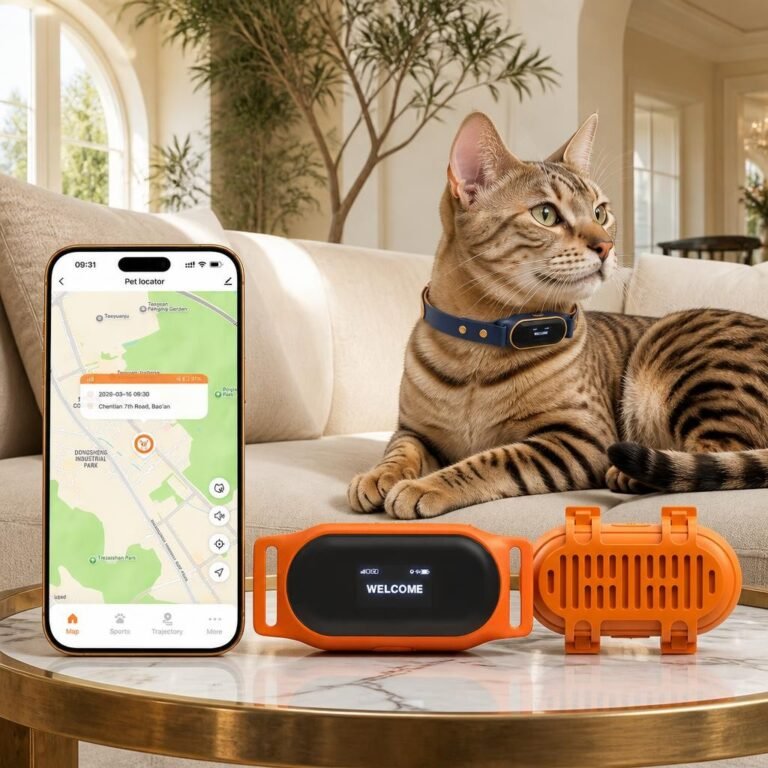
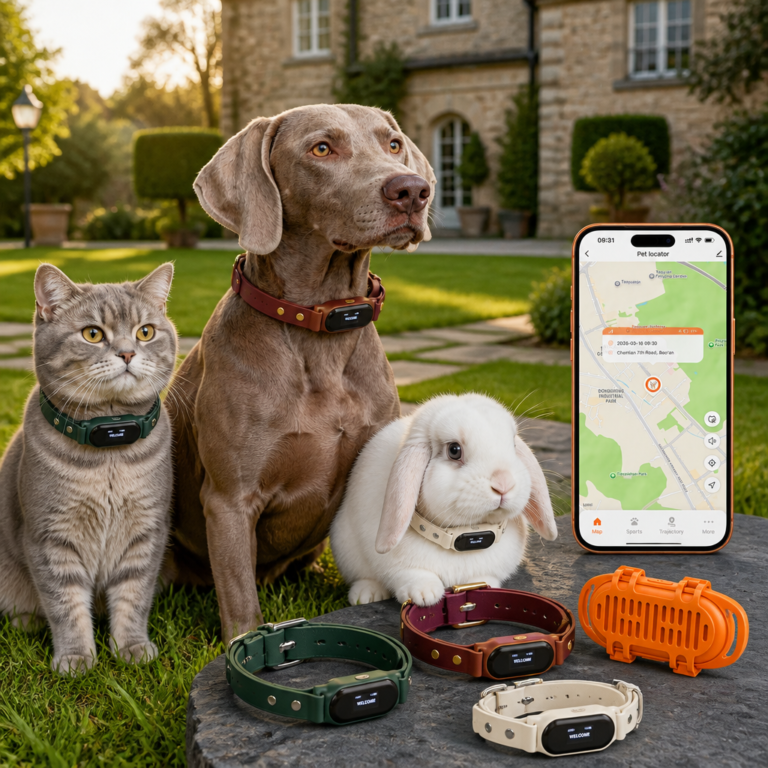
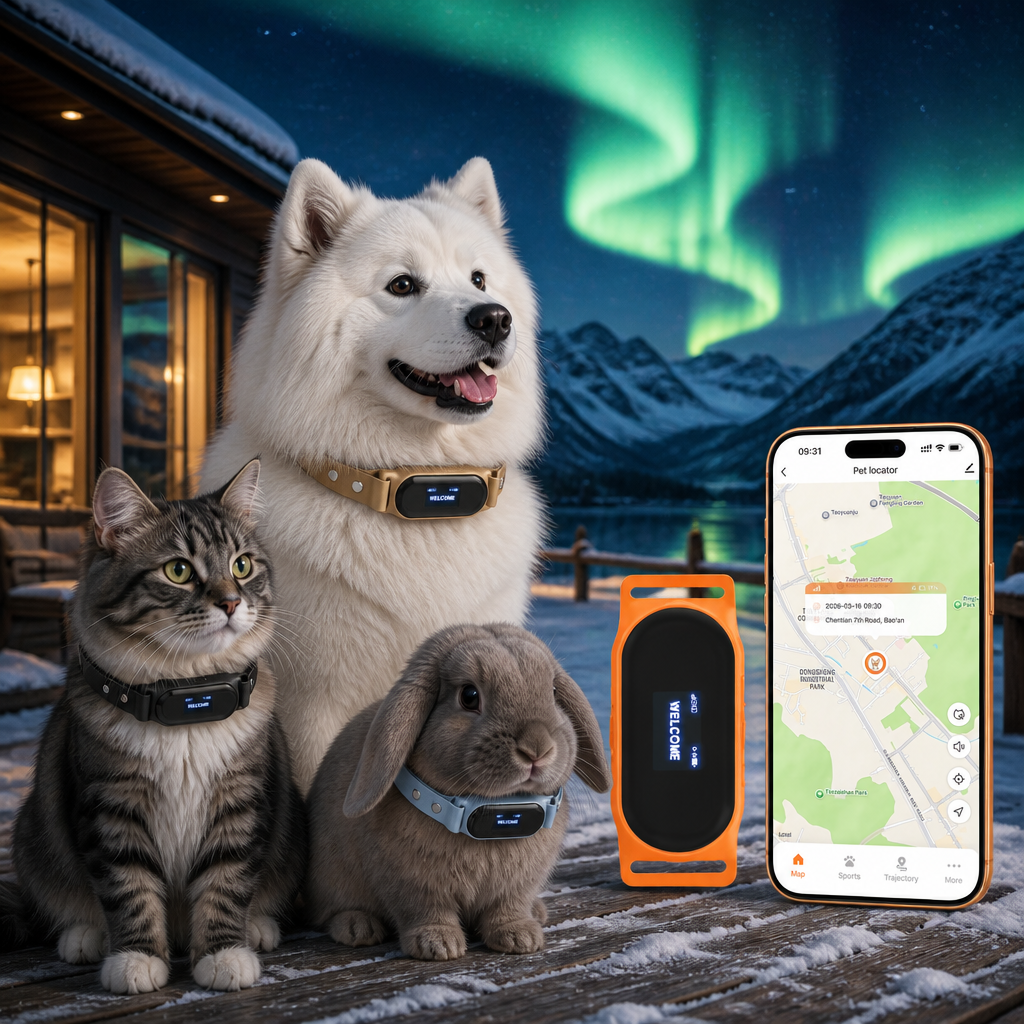
For this reason, both the Starvey Global SG-GPS-CB-C08 and SG-GPS-CB-C08PLUS are built on the Tuya Smart IoT platform, which provides permanent free access to all core tracking and health monitoring features with no mandatory subscription. This zero-recurring-fee model is a decisive selling point for both end customers and wholesale distributors, as it eliminates the single largest objection in the consumer sales process.
Both models also follow strict humane pet safety design principles: no shock-based correction, lightweight form factors, and non-intrusive activity, sleep and calorie monitoring. This aligns with strengthening regional animal welfare norms and reduces regulatory and reputational risk across markets.
3.2 Battery Life and Durability Built for Local Conditions
Short battery life is consistently ranked as the top consumer complaint about budget pet trackers in the Latin American market (Market Data Forecast, 2026). Variable power infrastructure and frequent outdoor use mean local buyers prioritize long standby time over niche software features.
The base model SG-GPS-CB-C08 delivers 3–7 days of standby time with a 500 mAh lithium polymer battery, paired with magnetic snap-on charging for improved waterproof reliability. The upgraded SG-GPS-CB-C08PLUS extends standby time to 10+ days, adds universal Type-C charging, includes a detachable alert module to reduce long-term pet burden, and supports custom voice reminders for intelligent geofence alerts. Both models carry an IP66 waterproof rating, engineered to withstand heavy rain, dust and the high-humidity tropical conditions common across much of the region.
3.3 Flexible Data Integration for B2B Partners
For larger distributors and enterprise clients, data sovereignty and platform customization are becoming non-negotiable requirements, particularly as regional data privacy regulations continue to tighten.
To address this, Starvey Global offers two structured integration paths. The first is standard open API/SDK access via the Tuya developer platform, which allows partners to build custom branded front-end applications while leveraging mature, stable cloud infrastructure. The second is fully custom firmware that supports direct TCP data transmission to a partner’s private server, with SMS command control for remote configuration — ideal for clients with strict data residency requirements. Custom firmware development fees are fully refundable for cumulative orders of 1,000 units or more, making the upgrade path accessible for growing distribution businesses.
Actionable Recommendations for Cross-Border Distributors
Based on market analysis and hands-on pilot project experience, we offer three core recommendations for wholesalers and Mercado Libre sellers entering the Latin American 4G pet GPS collar space:
- Validate with small-batch field testing first. Never commit to full-container inventory without testing 5–10 units on live local cellular networks. Start with a production-ready regional SKU, such as the Latin America version of the SG-GPS-CB-C08, to verify real-world connectivity, battery performance and user experience in your exact target market.
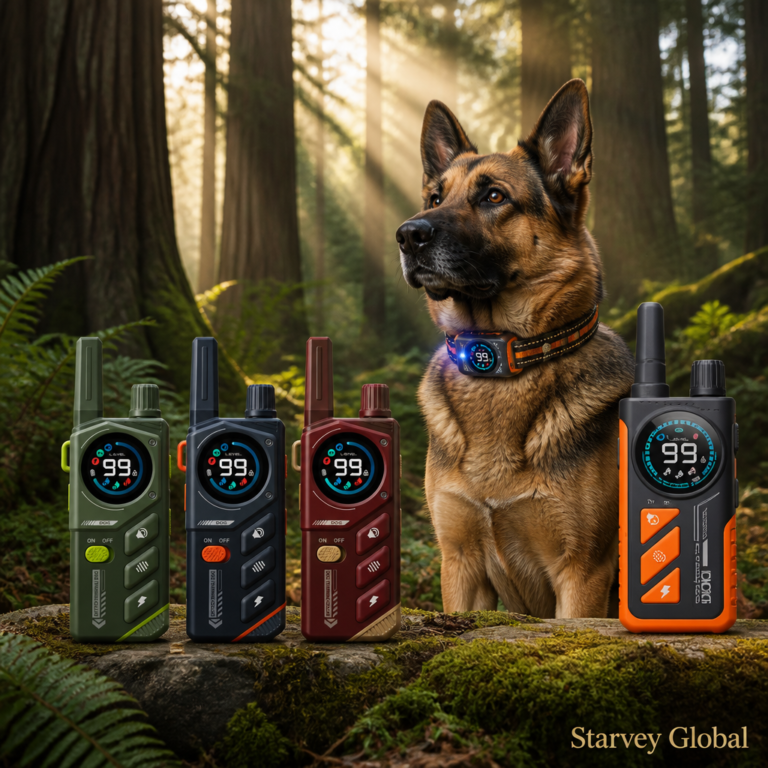
- Bundle complementary products to lift average order value. GPS trackers pair naturally with IATA-compliant pet travel crates and humane remote training collars for wholesale customers. Product bundles reduce per-unit shipping and customs costs, and create stronger customer stickiness than selling standalone trackers.
- Prioritize products with full, verifiable compliance documentation. All electronic pet products should carry valid CE, FCC and RoHS certification to streamline customs clearance across Latin American markets. Avoid uncertified budget alternatives, as enforcement of import safety rules for consumer electronics is tightening across Brazil, Argentina and Chile.
Conclusion
The Latin American 4G pet GPS collar market represents a substantial, still underserved opportunity for cross-border wholesalers and Mercado Libre sellers, with a projected 9.5% annual growth rate through 2034. However, profitable scaling requires more than importing generic global inventory.
The most competitive players in this market will be those that prioritize three things: region-optimized cellular hardware that avoids the band-compatibility pitfalls that sink new entrants; zero-subscription, humane product design matched to local consumer preferences; and flexible integration options that adapt to evolving regional data privacy rules. For most distributors, the lowest-risk, fastest path to market is to partner with suppliers that offer pre-built Latin America SKUs — such as the Starvey Global SG-GPS-CB-C08 and SG-GPS-CB-C08PLUS — and scale gradually based on verified local field performance.